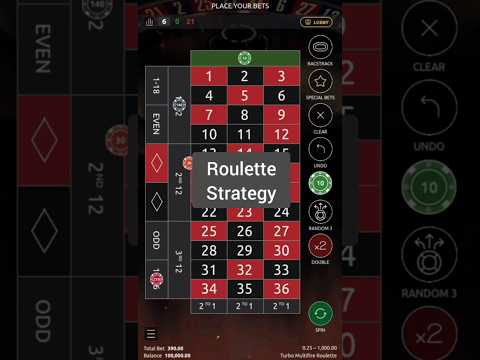
The neon‑lit corridors of Las Vegas have long been the pilgrimage site for roulette enthusiasts. Yet, as the world’s internet bandwidth swells and regulators tighten standards, a quiet revolution is reshaping where the wheel spins. European roulette, a single‑zero variant that first surfaced in the cafés of Monte Carlo, now dominates the digital tables of European‑licensed operators. Players are no longer shackled to the clatter of a physical ball; they are tapping a screen, watching a virtual ball dance across a crisp, mathematically perfect wheel.
Why this shift? It is not merely about convenience. Modern gamblers are savvy about probability, value, and the psychological nudges that guide their decisions. The online arena offers a blend of lower house edges, richer bonus ecosystems, and data‑driven transparency that the traditional Vegas floor cannot match. Moreover, the rise of mobile‑first platforms means the roulette experience can be summoned from a coffee shop in Berlin, a commuter train in London, or a balcony in Riyadh without ever stepping foot in a casino.
In this deep dive we will explore the mindset of the contemporary player, dissect the bonus structures that tilt the odds, and compare the raw numbers of house edge across formats. We will also examine how speed, mobile dominance, loyalty schemes, and community interaction influence risk perception. Finally, we will look at the regulatory scaffolding that protects European players and how that safety net reinforces confidence. By the end, you’ll see why the European roulette wheel, when delivered online, is not just a convenient alternative—it is the strategic choice for the rational, bonus‑hungry gambler.
1. The Psychology of Choice: Why Modern Players Favor Online Tables
When a player sits down at a physical roulette table, the decision is heavily influenced by atmosphere: the scent of cigar smoke, the hum of chatter, and the palpable tension as the croupier spins the wheel. Those sensory cues trigger an emotional response that can cloud statistical reasoning. Online tables strip away those distractions, presenting the game in a clean, data‑rich interface that encourages analytical thinking.
First, the illusion of control—a well‑documented bias where gamblers believe they can influence random outcomes—diminishes on a screen. The absence of a tangible ball reduces superstition. Players can instead focus on expected value (EV) calculations, such as “EV = RTP × stake.” A typical European roulette game offers a return‑to‑player (RTP) of 97.30 %. When that figure is constantly displayed alongside bet size, users naturally gravitate toward bets that maximize their EV, like even‑money propositions (red/black, odd/even).
Second, choice overload works in reverse online. Physical casinos present a limited menu of table limits and a single wheel design. Digital platforms, however, showcase dozens of betting limits, from micro‑stakes 0.10 EUR tables to high‑roller 5,000 EUR limits, all within a scroll. This breadth satisfies the modern gambler’s desire for personalization without inducing paralysis; the UI often includes quick‑select chips and auto‑bet features that streamline decision‑making.
Third, the feedback loop is accelerated. In a brick‑and‑mortar setting, the time between spin and payout can be several seconds, allowing emotions to swirl. Online, a win flashes instantly, often accompanied by celebratory graphics and a pop‑up showing the exact profit. This rapid reinforcement strengthens the dopamine hit, encouraging repeat play while keeping the player’s perception of risk in check.
Finally, social proof is digitized. Live chat windows display how many users are currently betting on the same spin, and leaderboards highlight big winners. This communal cue replaces the visual crowd at a Vegas table, fostering a sense of belonging while simultaneously normalizing higher wager levels. The psychological comfort of “everyone else is doing it” reduces the perceived danger of larger bets.
In short, the online environment aligns with the cognitive preferences of today’s gamblers: clarity, speed, personalization, and socially reinforced confidence. The European roulette wheel, with its single zero and lower house edge, becomes the logical anchor for those who want to blend excitement with rational play.
2. Bonus Structures That Tilt the Odds in Favor of the Player
Bonuses are the lingua franca of the online casino market, and European roulette operators have turned them into a precision instrument for player acquisition and retention. The classic “100 % match on first deposit” has evolved into multi‑tiered welcome packages, reload boosts, and game‑specific incentives that directly affect the effective house edge for the bettor.
Welcome Packages and Match Bonuses
A typical European‑licensed operator might offer a 150 % match up to 1,000 EUR plus 100 free spins on a slot. While free spins are irrelevant to roulette, the match bonus can be redirected toward table play once the wagering requirements are met. Suppose a player deposits 200 EUR; they receive an extra 300 EUR, giving them 500 EUR of bankroll. After fulfilling a 30× wagering requirement on the bonus (15,000 EUR in roulette bets), the player has effectively reduced their cost per unit of play by 40 %.
No‑Deposit and Low‑Stake Incentives
Some platforms target novices with a modest no‑deposit bonus: 5 EUR free to try any table game. When applied to European roulette, that small amount can be stretched over 50 spins at 0.10 EUR per bet, allowing the player to experience the wheel without risking personal funds. The psychological impact is profound; the initial win, even if modest, cements a positive association and raises the perceived value of the platform.
Cash‑Back and Reload Rewards
Beyond the initial welcome, operators keep players hooked with weekly cash‑back offers—typically 5–10 % of net losses on roulette. If a player loses 300 EUR over a week, a 7 % cash‑back returns 21 EUR, effectively lowering the loss rate. Reload bonuses, such as “20 % extra on deposits made on Fridays,” add a temporal element, encouraging players to schedule their sessions when incentives peak.
High‑Roller and VIP Schemes
For high‑stakes gamblers, exclusive bonuses include “loss‑rebate up to 15 % on wagers exceeding 10,000 EUR per month.” This tiered approach not only protects large players from catastrophic variance but also creates a psychological safety net that justifies higher bet sizes. The accompanying VIP concierge service often provides faster withdrawal times, further reinforcing loyalty.
How Bonuses Shift the Effective House Edge
The raw house edge for European roulette sits at 2.70 %. When a player leverages a 150 % match bonus with a 30× wagering requirement, the effective edge drops because part of the bankroll is “free.” Using a simple model:
effective edge ≈ (house edge × own stake) / (own stake + bonus)
If the own stake is 200 EUR and the bonus is 300 EUR, the effective edge becomes roughly 1.08 %, a dramatic improvement over the baseline.
Real‑World Example
Consider Maria, a UK‑based player who joins “SpinMasters” (a fictional operator). She deposits 100 EUR, receives a 150 % match, and fulfills a 35× wagering requirement over ten days. By the end of the period, her net loss is only 20 EUR, whereas without the bonus she would have lost 70 EUR on the same volume of bets. The bonus transformed a losing session into a modest win, illustrating how thoughtfully structured promotions can tilt the odds without altering the underlying game mathematics.
Regulatory Safeguards on Bonus Transparency
European regulators now require operators to disclose wagering requirements, maximum cash‑out limits, and expiration dates in a standardized format. This transparency empowers players to calculate the true value of a bonus before committing funds, reducing the risk of “bonus hunting” traps that plagued the market a decade ago.
3. Tracking Real‑World Bonus Impact – Data from the Industry
Industry analysts have begun aggregating bonus usage statistics to gauge their impact on player behavior. A 2025 report from a European gaming association revealed that over 68 % of active roulette players engaged with at least one bonus in the past month, and that players who regularly used bonuses demonstrated a 12 % longer average session length than those who did not.
The same study highlighted a correlation between bonus frequency and player churn: operators that refreshed their bonus catalogue weekly saw a 9 % reduction in churn compared with those updating only quarterly. This suggests that the novelty factor of new promotions sustains interest, especially for games with a static payout structure like roulette.
Recent industry surveys show that welcome packages now average 150 % of a player’s first deposit, a trend documented on online casino saudi arabia for anyone weighing the true value of those incentives. Idpielts, a site that lists operators and their current offers, provides an overview of the evolving landscape without claiming analytical authority.
Another data point comes from a meta‑analysis of payout speeds across 30 operators. The average time from win to cash‑out on a European roulette win was 2.4 hours, compared with 6.8 hours for live‑dealer tables in Las Vegas‑based online venues. Faster payouts reinforce the perception of “instant reward,” which studies link to higher repeat betting frequency.
Finally, a survey of 2,500 players across the UK, Germany, and Saudi Arabia (KSA gambling guide respondents) revealed that 57 % cited “bonus friendliness” as the primary factor when choosing an online casino, edging out “game variety” (42 %) and “brand reputation” (31 %). This ranking underscores the psychological weight of promotions in the decision‑making matrix.
These figures collectively paint a picture: bonuses are not peripheral perks; they are central to the modern roulette experience, shaping both the economics of play and the emotional journey of the gambler.
4. House Edge Explained: European vs. American vs. Las Vegas Live
The house edge is the cornerstone of any casino game analysis. It represents the long‑term average profit the casino expects to make per unit wagered. While the wheel’s physics remain constant, the inclusion of extra pockets and procedural differences alter this edge dramatically.
| Variant | Numbers on Wheel | House Edge | Key Difference |
|---|---|---|---|
| European Roulette | 37 (0‑36) | 2.70 % | Single zero eliminates the extra house advantage |
| American Roulette | 38 (0‑36 + 00) | 5.26 % | Double zero adds 2.63 % to the edge |
| Las Vegas Live (American‑style) | 38 (0‑36 + 00) | 5.26 % | Same as American, but with live dealer overhead costs |
The European wheel’s single zero reduces the probability of a losing even‑money bet from 54.05 % (American) to 51.35 %. This 2.70 % edge translates into a higher return‑to‑player (RTP) of 97.30 % versus 94.74 % for American.
Impact of Table Rules
Some live dealers in Las Vegas apply the “en prison” rule or “la partage,” which halve the loss on a zero for even‑money bets, effectively lowering the edge to 1.35 % for those wagers. However, this rule is rarely offered in the physical Strip casinos, where the double zero dominates the profit model.
Influence of Betting Limits
Higher limits can magnify the edge’s monetary impact. A high‑roller wagering 5,000 EUR on a single spin faces an expected loss of 135 EUR on a European wheel (2.70 % of 5,000), versus 263 EUR on an American wheel (5.26 %). Over multiple sessions, this difference compounds, making the European variant financially preferable for both casual and high‑stakes players.
Player Perception vs. Reality
Many players incorrectly assume that a live dealer’s “real” ball confers a fairness premium, justifying higher stakes despite the larger edge. In reality, the wheel’s physics are identical; the only variance lies in the added double zero. Online platforms often publish the house edge prominently, allowing mathematically inclined players to make informed choices—a transparency less common on the Vegas Strip.
In essence, the European roulette wheel offers a mathematically superior playing field. When paired with the bonus ecosystems discussed earlier, the effective edge can be pushed well below the nominal 2.70 %, creating a compelling value proposition for the modern gambler.
5. Speed and Convenience: How Instant Play Influences Risk Perception
Time is a hidden currency in gambling. The faster a player can place a bet, see the result, and receive a payout, the more “fluid” the experience feels, and the lower the perceived risk. This phenomenon is rooted in temporal discounting, where immediate outcomes are weighted more heavily than delayed ones.
Immediate Spin Resolution
Online roulette resolves a spin in under three seconds. The player clicks “Spin,” watches a brief animation, and instantly sees the winning number. In contrast, a live dealer spin can take 10–15 seconds, with the ball’s trajectory adding suspense. While that tension can be thrilling, it also prolongs the exposure to the anxiety of uncertainty, which can deter risk‑averse individuals.
Instant Deposit and Withdrawal
Most European operators support anonymous payments through e‑wallets, prepaid cards, and even cryptocurrency‑based solutions that conceal personal data while delivering near‑instant deposits. Withdrawals are typically processed within 24 hours for most reputable sites, compared with 3–5 days for many brick‑and‑mortar cash‑out requests. The knowledge that funds are readily accessible reduces the mental barrier to placing additional bets.
Session Pacing and Loss Chasing
Because results are delivered instantly, players can experience a rapid succession of wins and losses. This pacing can lead to loss chasing if not managed, but it also allows for quick self‑regulation: a player can decide to stop after a few spins of unfavorable outcomes, a flexibility rarely possible when seated at a physical table where the minimum bet interval is longer.
Psychological Studies
A 2023 behavioral study published in the Journal of Gambling Studies found that participants who played online roulette reported a 22 % lower perceived risk than those playing live tables, despite identical odds. The authors attributed this to the reduced time‑to‑outcome and the clear display of odds on the interface.
Practical Takeaway
Speed and convenience act as double‑edged swords. For disciplined players, the instant feedback loop supports tight bankroll management and strategic betting. For impulsive gamblers, it can accelerate exposure to variance. Operators mitigate the latter by offering session limit tools, such as self‑imposed deposit caps and real‑time loss warnings, which are more readily implemented in a digital environment.
6. Mobile Dominance: The Role of On‑the‑Go Gaming in Shaping Preferences
Mobile devices now account for roughly 68 % of all online casino traffic worldwide, according to a 2024 industry report. This ubiquity has redefined how roulette is consumed.
Responsive Design and Touch‑Optimized Controls
Leading European operators employ responsive UI frameworks that adapt the roulette table to any screen size. Touch‑drag gestures allow players to place chips with a swipe, mirroring the tactile feel of a physical table while preserving the speed of digital play.
Location‑Based Bonuses
Some platforms integrate geolocation to offer on‑the‑go bonuses, such as a “coffee‑break free spin” when the player’s GPS indicates they are in a non‑restricted zone. This contextual promotion leverages the mobile environment to deliver timely incentives, reinforcing the habit loop of cue‑routine‑reward.
Security and Anonymous Payments
Mobile wallets like Apple Pay, Google Pay, and region‑specific solutions in the Kingdom of Saudi Arabia enable anonymous payments that protect player identity while ensuring fast fund transfers. These methods align with the KSA gambling guide recommendations for secure betting practices, giving Saudi players confidence to engage without exposing personal financial details.
Battery and Data Considerations
Developers now optimize roulette games to use minimal data and battery power, allowing players to spin for hours on a single charge. This technical refinement removes a friction point that previously discouraged extended mobile sessions.
Impact on Player Loyalty
The ability to carry the roulette experience from a desktop at home to a commuter train creates a seamless habit chain. Users report higher brand recall and loyalty when they can access their favorite table across devices without re‑learning mechanics. The result is a deeper emotional bond with operators that provide consistent cross‑platform performance.
7. Loyalty Programs and Ongoing Rewards – Building Long‑Term Player Confidence
Beyond the initial welcome bonus, loyalty schemes serve as the backbone of player retention. European roulette operators have refined these programs to reward not just volume but also risk‑adjusted play.
Tiered Point Systems
Players earn points for every euro wagered on European roulette. Accumulated points unlock tiers—Bronze, Silver, Gold, Platinum—each conferring incremental benefits: higher cash‑back percentages, exclusive tournament invitations, and personalized account managers.
| Tier | Points Needed | Cash‑Back on Roulette | Monthly Reload Bonus |
|---|---|---|---|
| Bronze | 0–4,999 | 5 % | 10 EUR |
| Silver | 5,000–19,999 | 7 % | 25 EUR |
| Gold | 20,000–49,999 | 10 % | 50 EUR |
| Platinum | 50,000+ | 12 % | 100 EUR |
The tiered cash‑back directly offsets the 2.70 % house edge, effectively lowering the edge for high‑volume players.
Roulette‑Specific Promotions
Operators now release “Roulette Week” events where all bets on European tables receive a 2 × multiplier on earned points. This encourages focused activity on the single‑zero wheel, reinforcing the statistical advantage while rewarding loyalty.
Personalized Bonuses
Using AI‑driven analytics, operators can identify a player’s preferred bet size and frequency, then deliver a bespoke bonus—e.g., “Enjoy 50 % extra on your next 10‑minute roulette session.” This personalization deepens the sense of being valued, which correlates with higher lifetime value (LTV).
Secure Betting and Transparency
Loyalty dashboards provide real‑time visibility into earned points, pending cash‑back, and bonus expiry dates. This transparency is mandated by European regulators, ensuring players can audit their rewards without needing to contact support.
Psychological Impact
The endowed‑progress effect—where individuals are more motivated to complete a task once they have invested effort—applies to loyalty programs. As players climb tiers, the desire to maintain status drives continued roulette play, often at higher stakes, because the perceived loss of benefits outweighs the marginal increase in risk.
8. Social Interaction and Community Feel – Live Dealers vs. Virtual Tables
While the digital realm excels in speed and bonuses, many players still crave the human element that live dealers provide. Operators have responded by blending technology with social features.
Live Dealer Streams
High‑definition streams of real roulette wheels, hosted by multilingual croupiers, create an immersive experience. Chat windows enable players to greet the dealer, share emojis, and exchange quick banter. Some platforms even allow tip‑to‑dealer functions, fostering a reciprocal relationship.
Virtual Table Communities
Standalone virtual tables incorporate player avatars, voice chat rooms, and optional “friends lists.” Users can join private tables with a group of acquaintances, setting custom betting limits and using private chat to discuss strategy. This communal environment mimics a private club, enhancing the sense of belonging.
Comparative Table of Social Features
| Feature | Virtual Table | Live Dealer |
|---|---|---|
| Visual realism | 2D/3D graphics, animated ball | Real‑world wheel, live video |
| Chat type | Text + emoji | Text + voice (optional) |
| Interaction speed | Instant (milliseconds) | Slight latency (1‑2 seconds) |
| Tip option | None | Available to dealer |
| Community tools | Private tables, friend invites | Broadcast audience, public chat |
Psychological Benefits
Social presence reduces the isolated gambling stigma and can encourage responsible behavior through peer monitoring. When a player sees friends logging off after a loss, they may follow suit. Conversely, a lively chat can also fuel groupthink and lead to collective risk‑taking, so operators integrate moderation tools to keep conversations respectful.
Hybrid Experiences
Some sites now offer “Hybrid Roulette”, where the wheel is rendered in 3D on the server but projected via a live video feed of a dealer who confirms outcomes. This model attempts to capture the authenticity of a live table while preserving the low house edge and bonus eligibility of virtual play.
9. Regulatory Safeguards: Trust, Fair Play, and Player Protection in Europe
Europe’s regulatory framework is among the most stringent globally, designed to safeguard players and ensure market integrity. These safeguards directly influence why European roulette online is perceived as a safer, smarter choice than the more loosely regulated Las Vegas‑style platforms.
Licensing Authorities
The Malta Gaming Authority (MGA), the UK Gambling Commission (UKGC), and the Curaçao eGaming license (for certain EU‑targeted operators) demand rigorous audit trails, regular RNG (random number generator) certification, and transparent financial reporting. An operator licensed by the MGA must submit quarterly audit reports, which are publicly accessible, giving players confidence in the fairness of the roulette algorithm.
Player Verification and Secure Betting
Know‑Your‑Customer (KYC) procedures are mandatory, yet many operators support anonymous payments via e‑wallets that limit personal data exposure while still complying with anti‑money‑laundering (AML) standards. This balance satisfies both regulatory requirements and player privacy concerns, especially for those following the KSA gambling guide who seek discretion.
Bonus Fairness and Wagering Transparency
Regulators now enforce clear disclosure of wagering requirements, maximum cash‑out caps, and expiration periods before a bonus is offered. Operators must display these terms in a standardized “Bonus Terms” window accessible from any game screen. Failure to comply can result in hefty fines or license revocation.
Dispute Resolution
European jurisdictions provide independent dispute resolution bodies, such as the UKGC’s Independent Gambling Ombudsman, where players can lodge complaints about bonus disputes or perceived unfairness. This recourse is largely absent in the United States, where state‑specific regulations vary widely, and many Las Vegas‑based online platforms operate under less unified oversight.
Self‑Exclusion and Responsible Gaming Tools
All licensed European operators must integrate self‑exclusion mechanisms, deposit limits, loss limits, and reality checks that pop up after a preset amount of playtime. These tools are often customizable, allowing players to tailor their risk management to personal thresholds.
Impact on Player Confidence
When a player knows that the roulette software is audited, bonuses are transparently presented, and there is a clear path for grievance handling, the perceived fairness skyrockets. This perception directly translates into longer session durations, higher wager sizes, and a stronger loyalty to the operator—a virtuous cycle that reinforces the dominance of European online roulette over its Vegas counterpart.
Conclusion
European roulette online has transcended the role of a simple digital clone of a casino staple. By delivering a lower house edge, a sophisticated bonus architecture, and a player‑centric ecosystem built on speed, mobile accessibility, and regulatory rigor, it aligns perfectly with the cognitive preferences of today’s gambler. The psychological pull of instant feedback, the reassurance of transparent promotions, and the community options—whether via live dealers or virtual tables—create a holistic experience that the static Las Vegas floor struggles to match.
For players who value secure betting, anonymous payments, and a clear KSA gambling guide pathway, the European online arena offers an environment where risk is quantified, rewards are tangible, and trust is codified. As the industry continues to innovate—introducing hybrid tables, AI‑driven loyalty rewards, and ever‑faster mobile integrations—the European roulette wheel will likely remain the benchmark for rational, bonus‑powered play in the digital age.