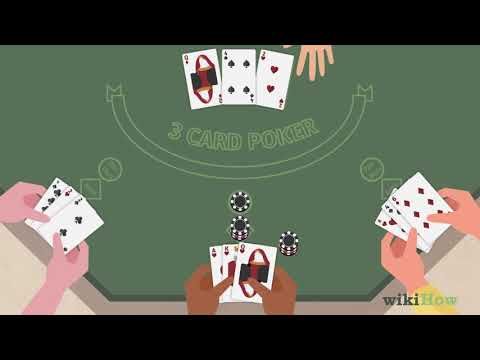
Pai Gow Poker has quietly become one of the most popular table games in the online casino world. Originating from the Chinese domino game Pai Gow, the poker variant was first introduced in brick‑and‑mortar venues in the early 2000s and migrated to the digital sphere as broadband connections made live‑dealer tables a reality. By 2026 the game is a staple on every major platform, prized for its low‑variance profile and the comforting “push” frequency that keeps players in the action longer than many high‑roller slots.
Even though the game’s design reduces the chance of large swings, strategy still matters. The way you arrange your five‑card and two‑card hands can shift the house edge by a full percentage point, and disciplined bankroll management can turn a modest win rate into a sustainable profit stream. In the era of data‑driven gambling, the most successful players are those who blend solid hand‑setting tactics with the modern tool of cashback.
Cashback, once the exclusive domain of sports‑betting sites, is now a standard offering on many online casino tables. Instead of a one‑time bonus, a casino returns a small percentage of a player’s net losses over a defined period, usually weekly or monthly. This “instant return” can soften the inevitable down‑swings of Pai Gow and, when combined with a well‑planned betting strategy, can boost long‑term profitability.
The purpose of this guide is twofold: first, to demystify the mechanics and optimal strategies of Pai Gow Poker; second, to provide a clear framework for evaluating and exploiting cashback programs. By the end of the article you will be equipped to compare operators, select the most generous schemes, and integrate those returns into a disciplined bankroll plan that maximizes your edge without inflating risk.
Understanding the Core Mechanics of Online Pai Gow Poker
Pai Gow Poker is played with a standard 52‑card deck and a unique two‑hand layout. Each round you receive seven cards. You must split them into a big hand (five cards) and a small hand (two cards). The big hand competes against the dealer’s five‑card hand, while the small hand competes against the dealer’s two‑card hand. Wins are settled separately; a win on either hand pays even money, a loss on both hands costs the original bet, and a split (one win, one loss) results in a push.
Hand Ranking and the “House Way”
The ranking system mirrors traditional poker: high card, pair, two pair, three of a kind, straight, flush, full house, four of a kind, and straight flush. However, the house way—a set of predefined rules that dictate how the dealer arranges its cards—adds a layer of predictability. Most online platforms follow the same house way, which generally aims to create the strongest possible big hand while preserving a decent small hand. For example, a dealer will always keep a pair in the small hand if it does not cripple the big hand’s strength.
Interaction of the 5‑Card and 2‑Card Hands
Because the two hands are settled independently, the overall outcome hinges on the combination of results. A player who wins both hands doubles the payout, while a win on one and a loss on the other yields a push. This structure creates a high frequency of pushes—often 30‑40 % of rounds—making Pai Gow a low‑volatility game.
The Role of the “House Way”
Many beginners default to the house way when arranging their own cards because it is simple and statistically sound. Studies of millions of hands show that following the house way yields an expected return (RTP) of roughly 97.5 % on most regulated sites. Deviating from it can raise the RTP to 98 % or higher, but only when the player recognises specific hand patterns that the house way mishandles.
Ties and the “Push” Phenomenon
Pushes occur when the player’s hand ties the dealer’s hand. In the five‑card comparison a tie is less common, but in the two‑card showdown ties happen frequently because there are fewer possible combinations. Pushes preserve your stake, which is a blessing for bankroll stability, but they also dilute the effective win rate. Understanding how often pushes appear on a given platform helps you size bets appropriately and plan session length.
Evaluating Cashback Programs: What to Look For
Cashback in table games works differently from slot‑based cash‑back. Instead of a percentage of total wagers, the casino returns a slice of the net loss—the amount you lose after accounting for wins—over a set cycle. This makes the offer more relevant to low‑variance games like Pai Gow, where players often break even.
Key metrics to examine include:
- Percentage Returned – Typical ranges are 5 % to 15 % of net losses. Higher percentages are attractive but may come with tighter wagering requirements.
- Cycle Frequency – Weekly cycles provide quicker feedback and allow you to adjust strategy fast. Monthly cycles smooth out short‑term variance but delay the cash‑back benefit.
- Wagering Requirements – Some operators require you to wager the cashback amount a certain number of times before it can be withdrawn. A 1x or 2x requirement is common; anything above 5x can erode the value.
To calculate the effective value, use a simple formula:
Effective Cashback Value = Net Loss × Cashback % – (Wagering Requirement × Cashback Amount ÷ 100)
If the result is positive, the program adds real value to your play.
Tiered Cashback Structures
A tiered system rewards higher volume players with increasing percentages. For example, a casino might offer 5 % cashback up to $1,000 of net loss, 8 % for the next $2,000, and 12 % beyond that. This encourages consistent play and can dramatically improve long‑term ROI for high‑rollers who keep their bankrolls healthy.
Bonus‑Free vs. Real‑Money Cashback
Some sites label the return as “bonus cash,” which must be wagered before withdrawal, while others credit it directly to your cash balance. Real‑money cashback is superior for players who prefer immediate liquidity, but bonus‑free cashback can still be worthwhile if the wagering multiplier is low.
Industry experts at best online casinos in saudi arabia have evaluated hundreds of operators, noting that the most player‑friendly schemes combine a weekly 10 % return with a 1x wagering requirement and no cap on the maximum weekly payout.
When comparing offers, also watch for hidden clauses such as “cashback only on selected games” or “excludes progressive jackpots.” These restrictions can turn an apparently generous program into a marginal benefit.
Top Online Casinos Offering Pai Gow with Competitive Cashback (2026)
| Casino | License | Software Provider | Cashback % (weekly) | Max Cashback / week | Mobile App | Pai Gow Variants |
|---|---|---|---|---|---|---|
| RoyalSpin Casino | Malta Gaming Authority | Evolution, Pragmatic Play | 12 % | $500 | iOS & Android | Classic, Live Dealer |
| Emerald Palace | UK Gambling Commission | Playtech, NetEnt | 10 % | $400 | Responsive Web | Classic, Fast‑Play |
| Apex Gaming Hub | Curacao eGaming | Evolution, Betsoft | 9 % | $350 | Dedicated App | Classic, Live Dealer |
| NovaBet Online | Gibraltar Regulatory Authority | Pragmatic Play, Evolution | 11 % | $450 | Mobile‑Optimized | Classic, Turbo |
| Zenith Slots & Tables | Isle of Man | Betsoft, Microgaming | 8 % | $300 | iOS & Android | Classic, Live Dealer |
All five platforms hold reputable licenses, employ leading software houses, and support full‑screen mobile play. RoyalSpin stands out with the highest weekly cashback and a generous $500 cap, while NovaBet offers a balanced mix of high‑percentage returns and low wagering requirements.
A few operators run limited‑time “Pai Gow Cashback Boost” promotions that temporarily raise the weekly percentage to 15 % for new players or during high‑traffic holidays. Keep an eye on the casino’s news feed; these boosts can add several hundred dollars to your cash‑back earnings in a single week if you maintain a steady betting rhythm.
Building a Winning Strategy Around Cashback
Integrating cashback into your bankroll plan begins with setting a baseline stake that aligns with the expected return. If a casino offers 10 % weekly cashback on net losses, you can treat that amount as a “soft rebate” that reduces the effective house edge.
Bet Sizing: When the cashback percentage is high (≥12 %), consider modestly increasing your bet size—perhaps 1.5 % of your total bankroll instead of the usual 1 %—because the extra loss risk is partially mitigated by the rebate. Conversely, with a low cashback rate (≤8 %), stick to conservative sizing to preserve capital.
Session Length: Because cashback is calculated on a weekly cycle, longer sessions that span several days tend to smooth out variance and generate more consistent rebates. Aim for at least three 2‑hour sessions per week; this cadence provides enough data points for the cashback engine to trigger while preventing fatigue‑driven mistakes.
Tracking: Use a simple spreadsheet to log each session’s net loss, the cashback earned, and the wagering requirement remaining. This practice not only ensures you claim every cent owed but also highlights patterns—such as days when your loss rate spikes—allowing you to adjust bet sizes in real time.
By treating cashback as a predictable component of your expected value, you can fine‑tune your risk exposure and keep the bankroll growth curve upward even during lean weeks.
Advanced Hand‑Setting Techniques to Complement Cashback Gains
While the house way offers a solid baseline, seasoned players can extract extra value by selectively deviating. Here are three scenarios where an aggressive split pays off:
-
High Pair in the Small Hand – If you hold a pair of Aces among your seven cards, placing the pair in the small hand guarantees a win on that side, while the remaining five cards often still form a strong big hand. This move raises the probability of a double win from roughly 12 % to 18 % in those specific deals.
-
Straight Flush Potential – When you have four suited cards that could complete a straight flush, keep the suited cards together in the big hand and place the remaining two cards (even if they form a low pair) in the small hand. The chance of the dealer matching your straight flush is minimal, and you secure a high‑ranking big hand.
-
Breaking a Weak Small Hand for a Strong Big Hand – Occasionally a weak two‑card hand (e.g., 7‑9 offsuit) drags down the overall win rate. By moving one of those cards to the big hand, you may upgrade the big hand from a pair to two pair, increasing the big hand win probability enough to outweigh the small hand’s loss.
Each deviation carries risk: the dealer’s house way may still outplay you, and a mis‑split can convert a push into a loss on both sides. Therefore, limit these aggressive moves to no more than 15 % of your total hands and always record the outcome. Over time you’ll see whether the incremental EV gain justifies the added complexity.
When paired with cashback, these higher‑EV splits become even more attractive because any occasional loss is partially reimbursed, preserving the net profit margin.
Managing Variance and Cash Flow with Cashback Incentives
Pai Gow’s natural variance is low, but streaks of pushes followed by consecutive losses can still dent a bankroll. Cashback acts as a variance dampener by returning a portion of those losses, effectively flattening the equity curve.
Cash Allocation: After each weekly cashback payout, split the reclaimed amount into two buckets:
- Reserve Fund (50 %) – Set aside for future sessions; this acts as a safety net and prevents you from chasing losses.
- Reinvestment Pool (50 %) – Use for the next week’s bets, allowing you to increase stake size gradually without exposing fresh capital.
This disciplined split leverages the “instant return” feeling while maintaining a conservative cash‑flow structure.
Psychological Edge: Seeing a cash‑back credit appear in your account each week creates a sense of progress, even when the underlying game results are neutral. This positive reinforcement can reduce tilt and keep decision‑making rational. However, avoid the “free money” trap—the temptation to over‑bet because you feel protected by the rebate. Stick to the bankroll percentages outlined earlier, and treat cashback as a bonus, not a guarantee.
Common Pitfalls and How to Avoid Them
-
Assuming High Cashback Equals Profit – A 15 % cashback sounds impressive, but if the wagering requirement is 5x and the maximum weekly cap is $200, the effective value may be less than a 10 % cashback with a 1x requirement. Always run the effective value calculation.
-
Ignoring Game‑Specific Restrictions – Some casinos limit cashback to slots or to “selected table games.” Verify that Pai Gow is included; otherwise the program adds no value to your primary activity.
-
Over‑Betting on “Free Money” – The perception of a safety net can lead players to increase bet size beyond the recommended 1‑2 % of bankroll. This inflates variance and can wipe out the benefit of the cashback.
-
Failing to Meet Wagering Requirements – If you withdraw the cashback before fulfilling the wagering condition, the casino may reclaim the amount or apply a penalty. Track your progress daily.
-
Choosing Unlicensed Operators – A generous cashback offer is often a lure used by rogue sites. Prioritize casinos with reputable licenses (e.g., Malta, UKGC, Gibraltar) and verified RNG audits.
Checklist of Red Flags
- Cashback limited to “selected games” that exclude Pai Gow.
- Wagering requirement higher than 3x the cashback amount.
- Maximum weekly payout lower than $100 for a high‑volume player.
- License from a jurisdiction with weak consumer protection.
- No clear terms and conditions page or ambiguous language.
By scanning for these warning signs, you can filter out offers that look good on paper but erode your profitability in practice.
Conclusion
Pai Gow Poker remains a favorite for players who enjoy low‑variance action with frequent pushes, but true mastery comes from marrying strategic hand‑setting with disciplined bankroll tactics. Cashback programs add a modern layer of financial cushioning, turning ordinary losses into partially reimbursed expenses and smoothing the equity curve over time.
When you evaluate operators, focus on transparent cashback percentages, modest wagering requirements, and unrestricted eligibility for Pai Gow. Use the comparative table and criteria outlined above to select a platform that aligns with your risk tolerance and desired profit margin.
Finally, remember that the edge you gain from nuanced hand‑setting is amplified when you treat cashback as a predictable component of your expected value, not as a free‑money crutch. By integrating these concepts, you can enjoy the game’s relaxed pace while steadily building a sustainable earnings stream. Happy playing, and may your splits be sharp and your cashback plentiful.