
Imagine preparing a DeFi transaction after work in Berlin. You connect your wallet to a lending protocol, approve a token, and prepare to swap another asset. The interface looks familiar, the gas estimate seems acceptable, and the transaction appears routine. Yet the important question is not whether the transaction can be signed. It is what the transaction will actually do after it is signed.
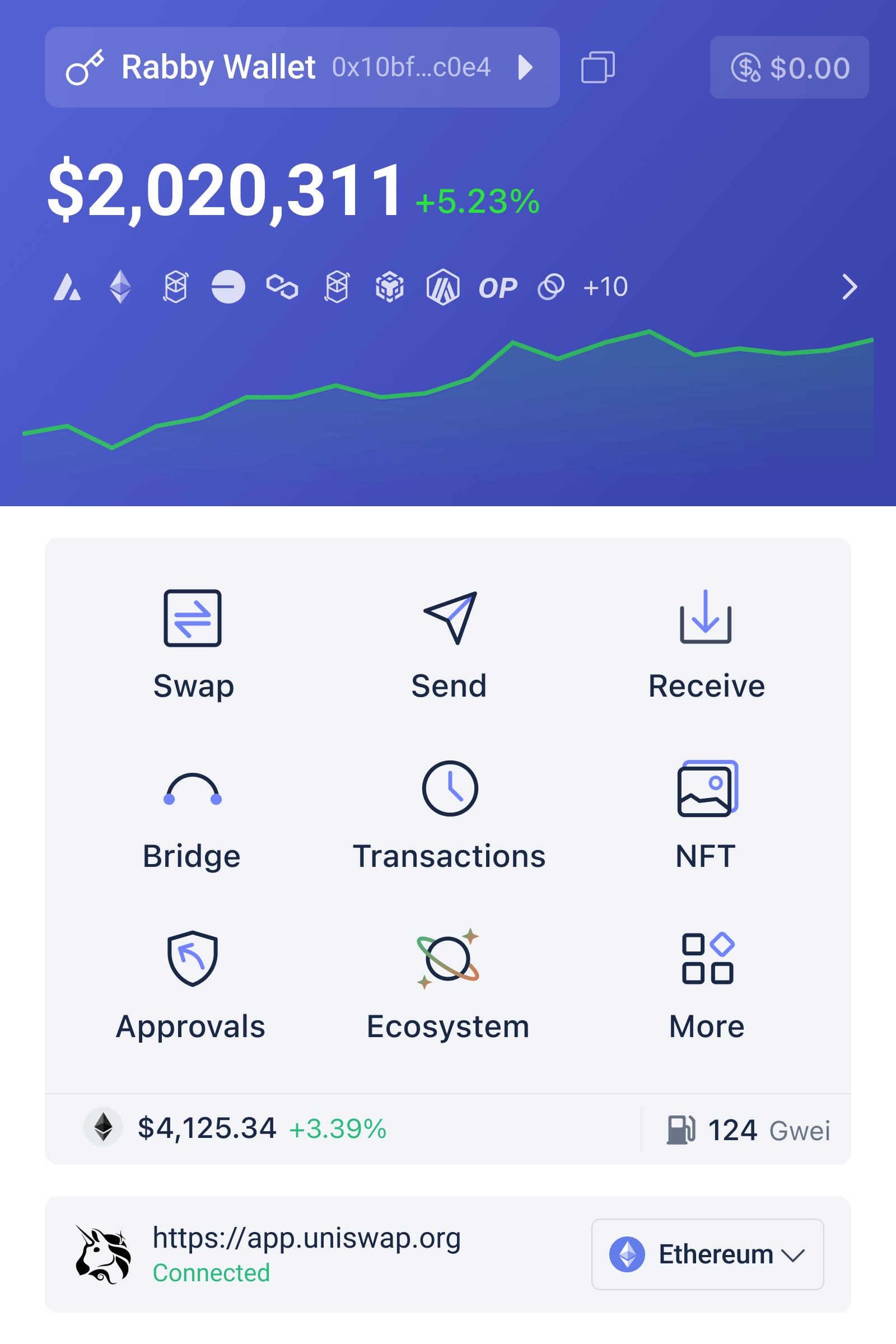
This is the problem transaction simulation tries to address. Rabby Wallet presents an expected preview of balance changes before approval, alongside security warnings for contracts, addresses, phishing indicators, and potentially unlimited token approvals. That makes it attractive to users comparing a multi-chain wallet with a more conventional browser wallet such as MetaMask. But simulation is not a guarantee, and convenience does not remove the need for judgment. The useful comparison is therefore not “safe wallet versus unsafe wallet,” but different layers of protection, control, and responsibility.
What transaction simulation actually reveals
A wallet normally shows the technical request that a decentralised application sends for signing. That request may contain contract addresses, function names, token amounts, and permission parameters, but raw blockchain data is difficult to interpret. A transaction simulation adds another layer: it attempts to execute the proposed action in a preview environment and translates the result into expected changes, such as tokens leaving one account, another asset arriving, or an allowance being increased.
The distinction matters because a signature is not merely a login confirmation. It is an authorisation for a specific state change on a blockchain. If a user signs an approval, the immediate balance may not change, but a contract may gain permission to move tokens later. If a user signs a swap, the visible output may differ from the expected result because of slippage, liquidity conditions, or a hostile contract. Simulation helps expose the intended consequence before the irreversible step.
Rabby’s model is particularly relevant in DeFi because users often move across Ethereum, Layer 2 networks, sidechains, and other EVM-compatible environments. Rabby supports more than 140 such networks, including Ethereum, Polygon, Arbitrum, Optimism, Avalanche, Base, and BNB Chain. Its automatic network switching reduces one common operational error: signing on the wrong chain because the user forgot to change networks manually.
Myth versus reality: simulation is not a safety certificate
The first common myth is that a successful simulation proves a transaction is safe. It does not. A simulation is a model of the transaction under particular conditions. It may detect that assets will leave the wallet, but it cannot turn an unknown protocol into a trustworthy one. It also cannot fully eliminate risks arising from a compromised website, a malicious interface, a flawed contract, rapidly changing market conditions, or a user misunderstanding what the transaction is meant to accomplish.
The second myth is that seeing a positive token balance is enough. A token can appear in the expected result without having meaningful liquidity, reliable pricing, or a legitimate purpose. Conversely, a transaction may show several internal movements that look alarming but are normal for a complex protocol. The user still needs to identify the contract, understand the action, and ask whether the economic outcome makes sense.
This is why Rabby’s security scanner and transaction simulation should be understood as complementary rather than interchangeable. The scanner can flag known risks such as phishing indicators, hacked contracts, suspicious addresses, or unlimited approvals. The simulation focuses on expected effects. One asks, “Is there evidence of a known danger?” The other asks, “What appears likely to happen if I sign?” Neither question replaces independent verification.
Rabby compared with a conventional browser wallet
MetaMask remains a widely used reference point because it is familiar and broadly integrated with Ethereum applications. Rabby is positioned as an alternative with a stronger multi-chain and risk-visualisation emphasis. The difference is less about whether both wallets can connect to decentralised applications and more about how much interpretation they provide before signing.
For a user who mainly holds assets and makes occasional transfers, a simpler wallet may be sufficient. For a user who regularly interacts with lending markets, decentralised exchanges, bridges, staking applications, and governance contracts, the value of a richer review layer increases. Rabby’s automatic network detection, integrated swap aggregator, bridge access through services such as LI.FI, and pre-signature balance preview are designed for that more operationally complex environment.
There is a trade-off. More information can improve decisions, but it can also create false confidence or alert fatigue. A long list of warnings does not automatically produce better security if users approve everything mechanically. The strongest workflow remains deliberate: inspect the application domain, verify the chain, read the action, check the recipient or contract, examine approvals, and compare the expected output with the economic purpose of the transaction.
Convenience features and their hidden boundaries
Rabby also tries to reduce a practical source of friction: gas management. Its Gas Account feature allows users to pay network fees with supported stablecoins such as USDC across networks, even when they do not hold the native token required by a chain. This can be useful for someone moving between several EVM networks, particularly when a small amount of native gas would otherwise require an additional exchange or transfer.
However, paying gas in a stablecoin does not make the underlying transaction free, and it does not remove dependency on the mechanisms that convert or route that payment. Users should still consider fees, supported networks, liquidity, and the exact terms shown in the interface. The same principle applies to the integrated swap aggregator: scanning venues such as Uniswap and 1inch can improve route discovery and potentially reduce slippage, but the best quoted route is not necessarily the lowest-risk route in every market condition.
Bridges create an even sharper boundary. A cross-chain transfer is not merely a change of network display. It may involve messaging systems, liquidity providers, wrapped representations, or multiple contracts. A wallet interface can make the process easier to follow, but it cannot erase bridge-specific smart-contract and settlement risk. Convenience is valuable precisely because it lowers operational complexity; it is also dangerous when lower complexity is mistaken for lower underlying risk.
Non-custodial control changes the user’s responsibility
Rabby is non-custodial: private keys are stored locally on the user’s device rather than being handed to Rabby’s servers. The software is open source and released under the MIT licence, and it can work with hardware wallets such as Ledger, Trezor, and OneKey. These properties improve control and auditability, but they do not make key management effortless.
If a seed phrase is exposed, a hardware device is used carelessly, or a malicious browser extension gains access to a signing environment, the wallet’s security model cannot compensate for every mistake. Non-custody means the user retains authority and also retains the consequences of losing that authority. Hardware signing can create a valuable separation between browsing and key use, but the transaction displayed on the hardware device still needs to be understood.
Rabby’s independence from its backend is another useful distinction. The wallet does not itself rewrite or manufacture transactions; its core signing functions can remain available if Rabby services are unavailable. Yet some warnings, previews, price information, or interface conveniences may depend on external data. Operational resilience and complete independence are not identical claims.
A practical decision framework for DEFI users
Before downloading a wallet or approving a transaction, it helps to separate three questions. First, is the wallet suitable for the user’s environment? Multi-chain DeFi users may value broad EVM coverage, automatic network switching, and hardware-wallet support. Second, does the transaction make economic sense? The expected token changes, fees, slippage, and approval scope should match the intended action. Third, what remains outside the wallet’s protection? Protocol governance, bridge design, token legitimacy, website integrity, and market liquidity still require separate assessment.
Users considering a download should obtain the software from an official, verified distribution channel rather than relying on search advertisements or unsolicited messages. Rabby is primarily available as a browser extension for Chrome, Brave, and Edge, with desktop and mobile versions also available. A useful starting point for understanding the browser-based installation path is the rabby wallet extension guide, but the principle remains broader than one product: verify the source before importing or creating a wallet.
A sensible signing routine is deliberately repetitive. Confirm the website and network. Read the action rather than only the application’s marketing label. Review the simulated balance changes. Check whether an approval is temporary or effectively unlimited. Investigate warnings instead of dismissing them. For large positions, test with a small amount first and consider a hardware wallet. This process may take longer than clicking through a generic confirmation window, but it converts transaction signing from a reflex into an informed decision.
What to watch as wallet interfaces evolve
The recent description of Rabby in the Chrome Web Store emphasises an open-source Ethereum and EVM wallet designed for DeFi and multi-chain use. That positioning reflects a wider direction in wallet design: the wallet is becoming an interpretation layer between users and smart contracts. If this trend continues, the important competition may not be the number of supported chains alone, but the quality of previews, warnings, simulation coverage, and explanations.
The open question is how reliable these interpretation layers can become as transactions grow more composable. A simple swap is easier to preview than a sequence involving a bridge, a permit, a lending position, and a derivative contract. Better simulation could make advanced DeFi more accessible, but users and developers will still need to understand what the simulator can and cannot observe. The strongest future model is therefore not automation replacing judgment. It is automation making the relevant judgment easier to perform.
FAQ: Rabby Wallet and transaction simulation
Does Rabby transaction simulation guarantee that a transaction is safe?
No. It shows expected effects and can reveal suspicious or unexpected balance changes, but it cannot guarantee that a contract, token, bridge, website, or market is trustworthy. Treat the preview as a decision aid, not as a security certificate.
Why is simulation useful for multi-chain DeFi?
Multi-chain use increases the number of contracts, networks, approvals, and fee systems a user must track. Simulation translates a technical signing request into expected asset movements, while automatic network switching reduces the chance of signing on the wrong chain.
Is Rabby a custodial wallet?
No. Rabby is designed as a non-custodial wallet, with private keys stored locally on the user’s device. That preserves user control but also means that seed-phrase protection, device security, and careful signing remain the user’s responsibility.
What is the most important habit when using transaction simulation?
Compare the simulated result with your actual intention. If you mean to swap one asset for another, verify the outgoing asset, expected incoming asset, fees, slippage, recipient, and approval scope. If any element is unclear, do not sign until it has been independently checked.