Since the sourcing of quality is significantly important due to the variability in purity and dosing accuracy among providers, it is crucial because KLOW is compounded. Support for muscle tissue (ligaments), and tendons, which usually require weeks for self-healing, is included. This article details what KLOW is (how it may function within the body), commonly discussed benefits, and the current evidence that supports these claims. The ratio of research utilized in published protocols serves as the standard, which is the foundation for all the reconstitution calculations mentioned earlier. During active recovery protocols, I administer KLOW for a duration of 6 to 8 weeks, ceasing once there is no further improvement. Depending on the injury severity or condition, most protocols last between 4 to 12 weeks.
None has been established as a clinical outcome for the KLOW blend in humans, and reported social-media “before and after” results are anecdotal rather than controlled data. A clear result in one setting leaves other questions open. Reading the material, model, route and outcome together keeps the MOTS-c peptide reference page each result within its actual scope. Yes (RUO peptide capsules are accompanied by analytical documentation), including HPLC chromatograms and MS spectra, to support experimental reproducibility and batch verification. Structural integrity within the amino acid backbone helps preserve stability and minimize degradation during common research handling protocols.
Occasional missed doses are not catastrophic, but consistent administration produces the best results. However, systemic distribution occurs regardless of injection location, so distant injection sites also support healing throughout the body. The most common reconstitution volume is 4.0mL of bacteriostatic water — which creates a 20mg/mL concentration for easy dosing calculations.
For researchers aiming to choose suitable model systems for their investigative inquiries (comprehending the molecular biology behind KLOW and its comparison to the GLOW formulation), which overlaps yet differs, is vital. These products have not been validated for safety and effectiveness — nor have they received evaluation or approval from the U.S. authorities. They are not meant for therapeutic application (clinical use), or human consumption. To ascertain what was tested and the results reported for a specific sample or batch — researchers should refer to the relevant Certificate of Analysis (COA). An analytical document detailing a particular test or sample should be regarded as a Certificate of Analysis — not merely as a marketing assertion.
Frequently asked questions
One should distinguish between an experiential report and a quantified result. The 2018 review of gene data addresses findings from cultured cells and computational studies; it does not provide evidence of whole-body rejuvenation in humans. The small peptide was transported into cells with the aid of PepT1 (and under the experimental conditions), inflammatory signaling was reduced. A lining is formed by epithelial cells; in this case, the intestinal lining was integral to the biological inquiry.
Our reputation at Real Peptides is built on the unwavering quality of our products. KLOW (Hypothesized) Subtle cellular pathway modulation — homeostatic support KLOW Its distinct modulatory role is its defining characteristic. Regenerative/Healing Promotes tissue repair — angiogenesis, anti-inflammation BPC-157, TB-500 While KLOW may support cellular resilience, it’s not a direct regenerative agent like these. Many peptides, from growth hormone secretagogues like CJC-1295 + Ipamorelin to regenerative compounds like BPC-157, have distinct and relatively well-characterized mechanisms.
Why the ‘Klow’ Branding Matters
Research on GHK-Cu’s gene expression effects has documented impacts on more than 30% of human genes — making it one of the most broadly acting small peptides identified in the literature. The functional consequence (increased cell migration velocity across multiple cell types) has been replicated across scratch assay and Boyden chamber experimental models. This domain is highly conserved across species — which supports its functional importance. This is a limitation worth noting explicitly for any protocol design relying on these figures. All four components are broken down through standard proteolytic pathways, meaning enzymatic cleavage into constituent amino acids that are recycled or excreted through normal metabolic routes. Whether any component crosses the blood-brain barrier (the selective filter that controls what enters brain tissue from the bloodstream) at relevant concentrations has not been directly established in humans.
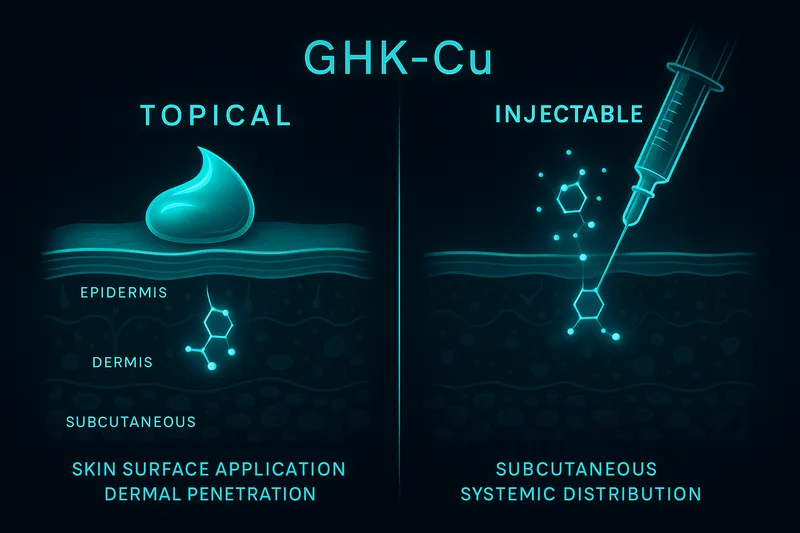
Subcutaneous injection is the route that delivers all four systemically, and it’s what every protocol in this article assumes. Some people go to every other day once improvement plateaus. The standard KLOW 80 formulation is 50mg GHK-Cu, 10mg KPV, 10mg BPC-157, and 10mg TB-500, for 80mg total. With a blend, the thing that matters is whether anyone measured all four peptides in the finished vial. Since KLOW is a research peptide blend, you need to buy from trusted suppliers with documented quality control.
Have the purported advantages of KLOW been confirmed?
The typical administration method is subcutaneous injection, usually performed daily or every other day in the abdomen or thigh. When sourcing KLOW for these purposes, prioritizing quality over price is essential. Healing was quicker for wounds, the formation of scar tissue was less aggressive, and the quality of the healed tissue resembled normal tissue rather than fragile scar material.
This classification does not mean the compounds are illegal to possess in most jurisdictions, but it does mean they are not authorized for human therapeutic administration outside of properly designed research protocols. It is one of the best-studied peptides for this application and has commercial applications in cosmetics as a result. KLOW’s four components promote new blood vessel growth through four different mechanisms. The combined angiogenic contribution of all four components through distinct, non-redundant mechanisms is the feature of KLOW’s design most frequently highlighted in its formulation rationale. TB-500’s activation of epicardial progenitor cells and support of cardiac progenitor cell function has been studied in cardiac injury models. BPC-157 has been studied in rodent tendon transection and crush injury models, demonstrating accelerated tendon-to-bone healing with enhanced collagen fiber organization and reduced healing time compared to untreated controls.